
Pilot will not stay lit
Depending on the appliance, flame sensing, thermocouple or thermopile performance, pilot flame quality, gas control behavior, or draft conditions may be involved.
Boiler service · Medford, MA
Ignition problems can involve standing pilots, electronic ignition, flame sensing, gas controls, wiring, or upstream conditions that prevent the boiler from completing its start sequence.
Service-request coverage: ZIP codes 02155 and 02153.
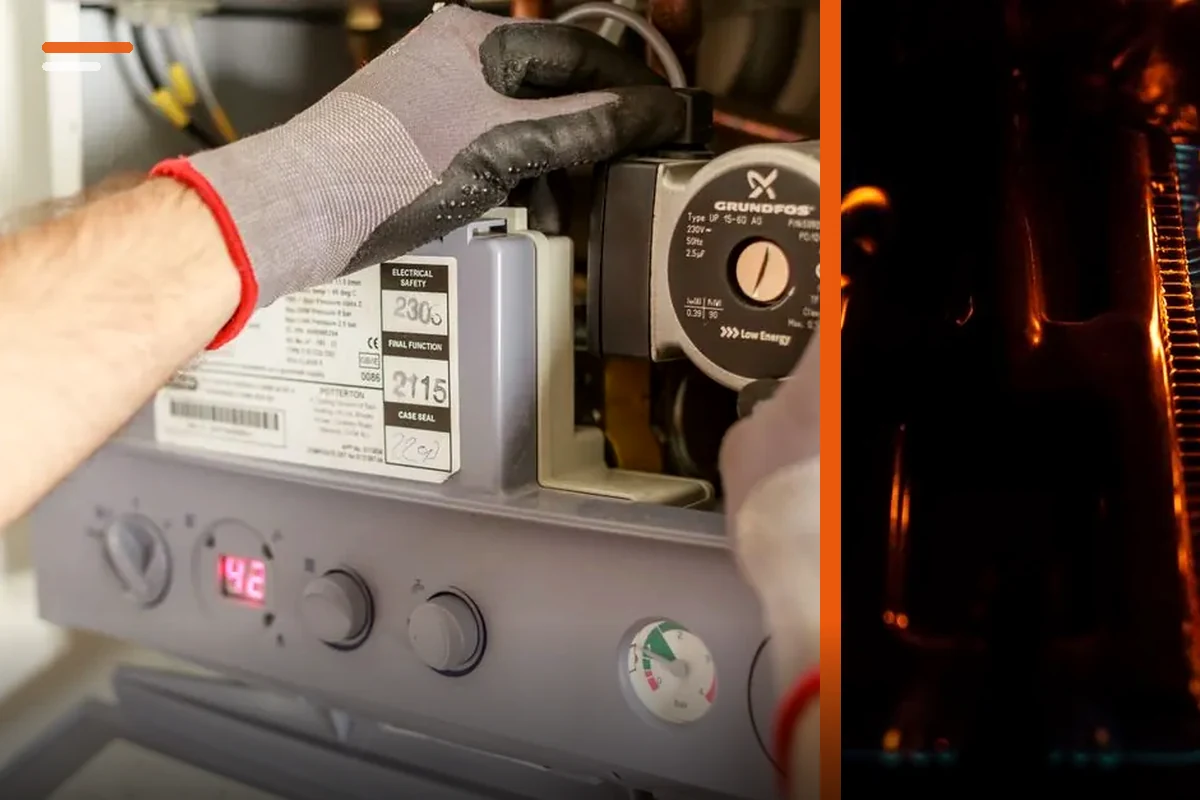
Service overview
Ignition problems can involve standing pilots, electronic ignition, flame sensing, gas controls, wiring, or upstream conditions that prevent the boiler from completing its start sequence.
Ignition troubleshooting is sequence-based. Instead of replacing a part because the boiler “doesn’t light,” a professional traces the call for heat through the controls and verifies which required condition is missing.
Boiler Repair Pro can help route a service request to an independent provider. The provider who accepts the request is responsible for diagnosis, recommendations, credentials, pricing, and any work performed. This distinction keeps the site useful without implying that Boiler Repair Pro employs or dispatches its own technicians.
Before service, keep a short symptom timeline. Record whether the issue appears during a call for space heat, domestic hot water demand, or both. If a pressure gauge is visible without opening the appliance, note the reading when cold and after a heating cycle. These observations can improve the first conversation with the service professional.
Symptoms and causes
Depending on the appliance, flame sensing, thermocouple or thermopile performance, pilot flame quality, gas control behavior, or draft conditions may be involved.
Electronic ignition systems move through a sequence. Knowing where that sequence stops—call for heat, pre-purge, spark, gas opening, flame proving—can make diagnosis more precise.
A flame-proving signal, control interruption, pressure fault, or another safety input may end the cycle shortly after ignition. The root cause should be confirmed before parts are replaced.
Diagnostic approach
The useful diagnostic path follows evidence rather than a generic parts list. The professional may compare the reported symptoms with what the boiler does during an actual call for heat, then test only the systems that are relevant to that sequence.
Findings should be explained in plain language: what was observed, what component or condition is most likely responsible, whether operation is safe, and which repair or maintenance choices are reasonable.
These are examples of professional diagnostic methods, not a claim that Boiler Repair Pro owns equipment or performs the work.
Repair decisions
When testing identifies a failed control, valve, pump, ignition component, leaking fitting, or another specific defect, the provider can explain the repair scope and any related system checks.
A component failure may be secondary to pressure, circulation, water quality, wiring, or control behavior. Addressing the contributor can reduce the chance of repeating the same symptom.
Some systems need a model-specific part, a specialist, access coordination, or further diagnostic time. A responsible recommendation can be to stop and plan rather than improvise.
What to expect
The provider uses this step to connect the symptom with the system condition and decide what to check next.
The provider uses this step to connect the symptom with the system condition and decide what to check next.
The provider uses this step to connect the symptom with the system condition and decide what to check next.
The provider uses this step to connect the symptom with the system condition and decide what to check next.
The provider uses this step to connect the symptom with the system condition and decide what to check next.
Write down whether the thermostat is calling, whether other zones or fixtures work normally, whether the problem follows a particular time of day, and whether the boiler has been reset. If the system has an accessible display, preserve the exact wording or code instead of paraphrasing it.
Keep the boiler area accessible, but do not remove panels. Move stored items away only if it can be done safely. If water is present, avoid standing in it near electrical equipment. If the issue involves fuel odor or a carbon-monoxide alarm, leave the area and follow emergency guidance rather than waiting for a routine service appointment.
After diagnosis, ask what evidence supports the recommendation and whether any related condition should be monitored. A good explanation should distinguish the failed component from normal wear, maintenance opportunities, and optional improvements.
For recurring problems, a short record of pressure readings, fault codes, or affected zones can reveal patterns. That record is often more valuable than trying multiple resets or adjustments between visits.
Symptoms often overlap. Explore leak and pressure repair, ignition repair, radiator and baseboard heating repair, or maintenance and flushing guidance.
Request professional evaluation when the symptom is recurring, stops heat or hot water, involves leaking water, or cannot be safely explained from normal homeowner observations. Gas odor, combustion concerns, carbon-monoxide alarms, or electrical burning smells require immediate safety action first.
Note when the symptom started, what the thermostat or boiler display shows, whether the problem is constant or intermittent, and any safe gauge readings or visible leakage. Do not remove covers or bypass controls to gather information.
Usually not. A code is a starting point, not proof that a specific part has failed. A professional may combine the code with sequence testing, pressure or temperature observations, and system-specific checks.
A standing-pilot appliance and an electronic-ignition boiler can fail for very different reasons. With a standing pilot, the professional may consider flame quality, pilot assembly condition, thermocouple or thermopile response, gas control behavior, and draft. With electronic ignition, the focus shifts toward the commanded sequence, spark or hot-surface ignition, gas-valve signal, flame establishment, and flame-proving feedback.
The moment of failure is therefore useful. If the boiler never attempts ignition, the missing condition may be upstream in the call-for-heat or safety circuit. If spark is present but no flame appears, a different set of checks becomes relevant. If flame appears and then drops out within seconds, flame proving, grounding, control logic, or another safety input can become more important than the igniter itself.
Flame sensors and ignition electrodes must be evaluated in the context of placement, cleanliness, wiring, and measured signal where applicable. Cleaning a sensor can be an appropriate maintenance action on some equipment, but it is not proof that every lockout is caused by a dirty sensor. A recurring failure after cleaning deserves the same sequence-based diagnosis as the original complaint.
Gas-valve and control-board diagnosis should be evidence-driven because both components sit inside a chain of prerequisites. A valve that does not open may be responding correctly to a missing command. A board that reports a fault may be receiving a real unsafe input. Electrical testing, manufacturer logic, and observed sequence together reduce the chance of expensive guesswork.
Homeowners can contribute without opening the appliance. Note whether there is clicking, fan activity, pump activity, a visible pilot where the appliance is designed for one, a short-lived flame, or a specific code. Avoid repeated resets, manually holding controls in unsafe positions, or attempting to light equipment contrary to its instructions.
At the end of an ignition repair, the useful verification is several normal start-and-stop cycles under realistic demand. Ask whether flame was proven correctly, whether the fault history points to another intermittent issue, and whether the provider observed any condition that should be monitored. Reliable ignition is about a repeatable safe sequence, not just one successful start.
Share the symptoms you are seeing so the service request can be matched appropriately.